
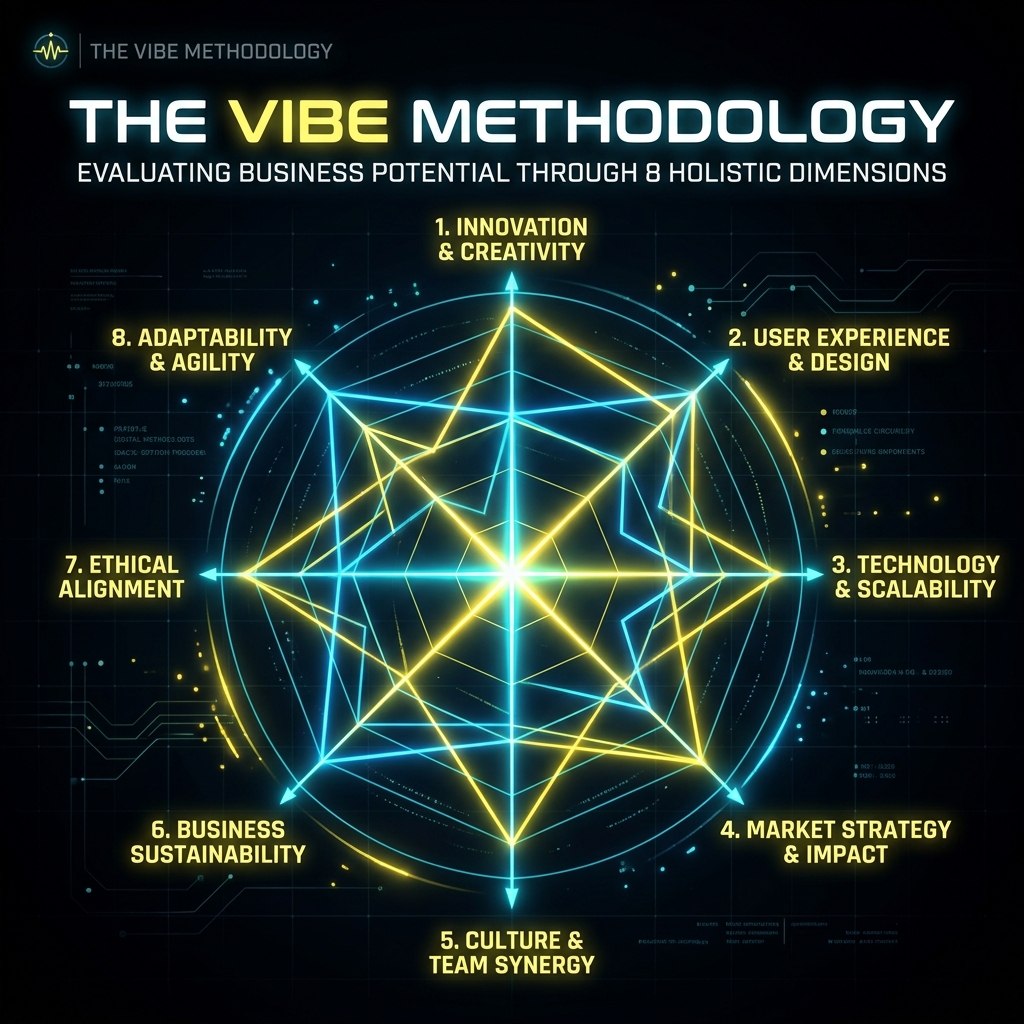
In Part 1, we talked about the Audit Framework I wish I’d had. In Part 2, we dive into the VIBE Methodology itself. Why 8 dimensions? Why these specific weights?
From Subjective to Objective
Most developers “know” when a codebase is bad. It feels fragile. It looks inconsistent. It’s “vibey” in a bad way. The VIBE framework takes these subjective signals and binds them to production-grade criteria.
- Velocity (V) isn’t just “how many Jira tickets we close.” It’s “how long does it take for a line of code to reach the edge.”
- Build Quality (B) isn’t just “no lint errors.” It’s “is the architecture resilient to a model hallucination.”
The Weighting Logic
We weight Intelligence (I) and Security (S) at 15% each because in the age of AI, these are the highest-risk vectors. A fast app with a security hole is just a fast way to lose user trust.
By following the VIBE methodology, ProductBees provides a signal that investors and buyers can actually use to make decisions. It’s not a “best guess”—it’s an audit.
[!TIP] Audit Dimension: Intelligence (I) Every AI integration must have a fallback. If your ‘Intelligence’ dimension doesn’t handle a
500 errorfrom the LLM provider gracefully, your VIBE score drops by 20 points instantly.
Next: Part 3 — Scoring Intelligence (I) How to evaluate the ‘Brain’ of an AI-built application.